.

Tell Buchheit Not to Give Away Free Chicks to Kids

Buchheit is a multi-purpose chain store that sells everything from farm equipment to building supplies.

In a horrible move, they are offering this Saturday a FREE baby chicken to every child.

Seriously?

This is just a bad idea on so many levels. Children are not responsible for the care of animals, their parents are, and how many are really capable of welcoming a chick, let alone an adult chicken, into their home. Is it legal? Do they have the right setup?

More thought than stopping by the local country store should go into welcoming an animal into your home. Impulse buys (and this one's free!) generally end poorly for the animals.

Please ask Buchheit NOT to follow through with this promotion. It teaches children and parents that animals are disposable and may result in the death and suffering of countless chickens.

Buchheit Corporate Office
33 P.C.R. 540
Perryville, MO 63775
(573)547-1010
Office Hours
Mon-Fri 8:00am to 5:00pm
http://www.buchheitonline.com/


Locations:

Buchheit of Perryville
1011 South Hwy 51
Perryville, MO 63775
(573)547-6565
Mon-Sat 7:00am to 8:00pm
Sunday 9:00am to 5:30pm

Buchheit of Jacksonville
2200 West Morton Ave.
Jacksonville, IL 62650
(217)245-4440
Mon-Sat 7:00am to 8:00pm
Sunday 9:00am to 5:30pm


Buchheit of Herculaneum
200 Riverview
Herculaneum, MO 63048
(636)475-6020
Mon-Sat 7:00am to 9:00pm
Sunday 8:00am to 6:00pm

Buchheit of Sparta
1817 North Market
Sparta, IL 62286
(618)443-2455
Mon-Sat 8:00am to 8:00pm
Sunday 9:00am to 5:30pm

Buchheit of Jackson
2801 Old Orchard Rd.
Jackson, MO 63755
(573)204-1700

Mon-Sat 7:00am to 9:00pm
Sunday 9:00am to 5:30pm

Buchheit of Greenville
1400 E. City Rt. 40
Greenville, IL 62246
(618)664-9100
Store Hours
Mon-Sat 8:00am to 8:00pm
Sunday 9:00am to 5:30pm

Buchheit of Centralia
1045 W. Broadway
In the Fairview Park Plaza
Centralia, IL 62801
(618)533-3850
Mon-Sat 8:00am to 8:00pm
Sunday 9:00am to 5:30pm

Goat and Sheep: Play Fighting, Interesting Behavior

If you have an interest in inter-species play/fight behavior, then watch this video I took yesterday. Otherwise, it might be rather boring. You have been warned.

Animal Place is home to 11 goats and 8 sheep. The sheep have learned goats are more aggressive than they and many have horns. Every now and then, a younger sheep will show an interest in interacting with one of the goats.

Lenny, a 2-yr-old Merino wether (neutered) and Annie, a middle-aged Boer doe, began the dance of play. Some may argue they are displaying signs of dominance, but Lenny’s lack of intense aggression leads me to believe they are more play than actual fight. Further, Annie shows incredible restraint when she head-butts Lenny.

Sheep and goats are different in obvious and not-so-obvious ways. Goats are browsers while sheep are grazers – both are ruminants, with a four-chambered stomach. The horns on goats and sheep differ. When approached by potential predators, sheep form a tight flock and tend to run away. Goats tend to form a tight herd, turn to face the predator in a straight line, and only back down if forced to (I’ve seen foolish dogs head-butted and tossed by goats). There is one sheep at Animal Place who acts like a goat when faced with a dog, and he once “saved” the sheep flock from a roaming Border Collie by charging down the hill and chasing the dog off. (He came up to me quite pleased with himself). So, of course, there are individual variances and personalities.

When fighting, sheep back up and charge; goats circle around, move a few feet away, rear up at an angle, and then land hard for the head-butt. The fighting “head-butt” behavior is also a form of play and a way to interact socially with conspecifics and, dangerously, sometimes with humans as well.

The Video
Annie exhibits classic goat head-butting behavior. Lenny does not exhibit classic sheep head-butting behavior and tries, in his own small way, to emulate Annie. He does not have the behavioral inclination to rear up or angle himself, but you can see him try a couple of times to hop a little before butting heads.

You can also see how restrained Annie is in her rearing and butting behavior. Instead of ramming full-force, she slows slightly before making contact with Lenny. I think this shows Annie’s ability to modify her behavior to accommodate Lenny. She does not do this with goats.

You’ll see a white sheep, Simon, come in for a closer inspection and back away quite quickly when he realizes there’s a goat involved. I am certain he thinks Lenny is nuts.

Lenny is naturally polled – he was born without horns. As you can plainly see, Annie has horns.The only time Lenny becomes uncomfortable is when Annie's horns encounter his unnatural wool and snag.

After a bit, Lenny becomes clearly uncomfortable. He pulls back and starts to grind his teeth (it looks like he is chewing his cud). But Annie’s not giving up and they smash heads again. About 30 seconds later (not in video), Laura comes over and intervenes. You can see and hear the distinct difference between two horned goats head-butting and what you’ve been seeing between Annie and Lenny. It’s not just the sound, either, it’s the force. Annie has really been restraining herself with Lenny but does not do so w/ Laura.

I love the moment after. Laura standing proud in the middle, a referee. Annie is annoyed off to the side and Lenny isn’t sure what to do. But I think he’s probably relieved.

And just for sake of comparison, I kept in when Annie and Laura continue their “fight”. You can see the difference in force. Laura does not rear up a lot because she was dragged around by a broken front leg before arriving at the sanctuary. It healed but not completely.

I like what this video conveys: Nonhuman animals can adjust their behavior to accommodate others. Individuals can show curiosity and avoidance or show curiosity and interference. Sheep are not all “sheep” – Simon would not do what Lenny did. Goats are not all “goats” – one of the other goats would have hurt Lenny, but Annie adjusted to his behavior.


Meet the Potbellied Pigs!

Meet the Animal Place Chickens!

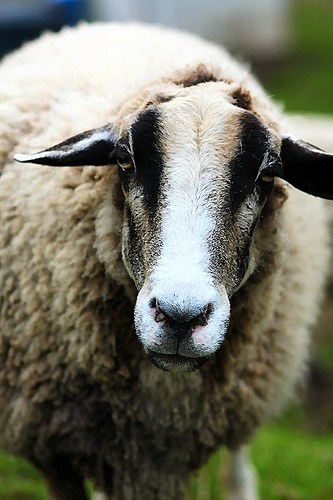
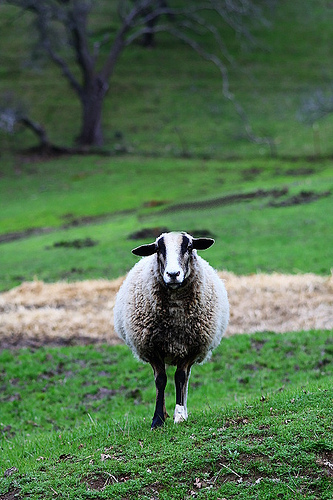
Sophie Sheep

Sophie is a 6-yr-old sheep and proud of it. Rescued as a bummer lamb from a farm, along with two other lambkins, Sophie has lived her whole life at the sanctuary. Lucky sheep!

Here are a couple shots of Miss Sophie.


Sophie is serious

Sophie is pretty

Meet Some of the Animal Place Crew!

Photo Art for Animal Place

Photos of Sanctuary Animals
Every animal at the sanctuary is precious and for visitors, it’s hard not to want to bring them home! Well, now you can! Welcome one of the Animal Place residents into your home with a matted photo. Even if you haven’t visited the sanctuary, welcome a bit of it into your home! And know that a portion of your purchase directly benefits the animal in the picture and all the animals at the sanctuary!

Each photo is 8x10” printed on acid-free paper on an 11x14” mat and secured in a poly-bag. Each photo is attached in such a way that you can re-frame or re-mat, if you prefer.

Is this a gift? Make sure to include the recipient’s address in the “merchant notes” block.

Each photo is $18. Purchase three and receive a 20% discount – only $43.00! Please specify which three you want in the “merchant notes” section.

Choose from:

Gilbert the Goat - 5 LEFT
Finnegan the Rooster -
Nicholas the calf - 4 LEFT
Summer & Freedom the calves - IN STOCK
Virginia &Lenny the sheep - 14 LEFT


Animals


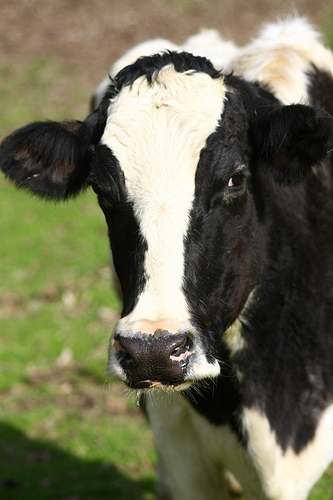
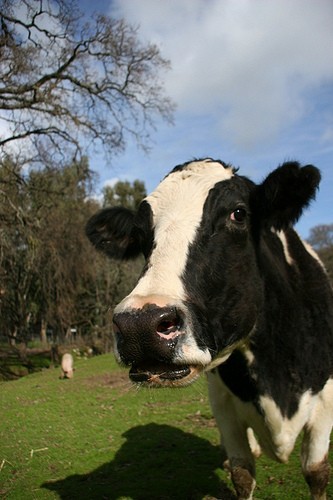
Miss Sadie

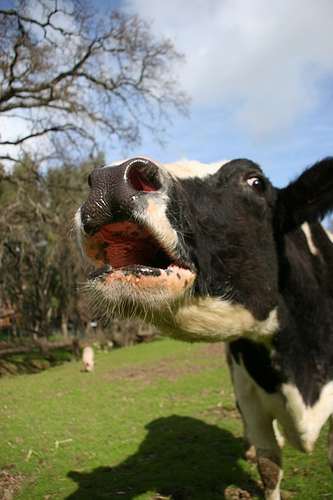
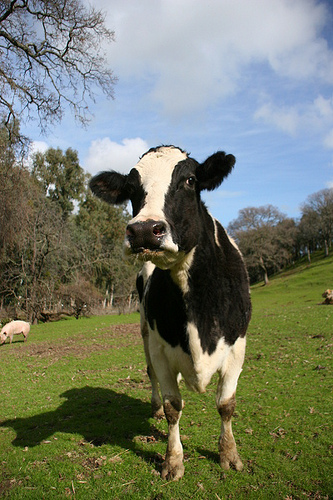
Sadie seems to feeling a bit better. Not perfect, but better. Here are some shots from today:

Sadie is such a serious cow

Yo! I'm Sadie

Thank you-moo!

You human, what are you doing?

The Stare of Sadie

On a cool, foggy morning I crouch next to her, scratching her neck as she stretches, and angles for the optimal position. The emerging sun glints off her hair, reflects back. She looks into my eyes. I gaze back into brown-black pools of what? Intelligence? Thought? Emotions? That and more? We had never communicated like this before – she, a cow; me, a human. For years, I tried to make eye contact, to convey my love, respect, joy at being near her. And, she would look away, shake her head, throw off my advances. Not today.

Sadie is a steady being, a painful one, a creature who is sometimes a complete mystery to me, sometimes a bright light of clarity. I fumble in my friendship with her. She tolerates my awkward attempts at communication, endures my steady hope that today, today is the day we understand each other.


Who is Sadie?

To know Sadie now, you must know who she was…or perhaps, wasn’t.

You can read more over at Animal Rights and AntiOppression

New York Dairy Investigation - not limited to factory farms

Mercy for Animals recently investigated a large, New York dairy farm. ABC News and Nightline both covered the story. Follows is video footage. Please be warned, some of the content may be difficult to watch.


The video is not easy to view. I love cows, they are my favorite of the large farmed animals. Two cows on a small dairy farm in northern California inspired me to go vegan. At the sanctuary, there is Sadie, a cow who I am honored to know and love. She too came from a small dairy farm and her life was miserable - she was tail-docked, de-horned, and deprived of her babies time and time again.

Practices Common on Most Dairy Farms
Tail docking occurs on farms of ALL sizes, not just factory farms. Approximately 1/3 of all dairy cows endure the amputation of their tail without pain relief. The American Veterinary Medical Association and the Association of Bovine Practitioners oppose this practice.
 
Dehorning without pain relief occurs on ALL farms, not just factory farms.

Maternal deprivation occurs on ALL farms, not just factory farms. 100% of all male calves are removed from their mothers the day they are born. 97% of all female calves are removed from their mom within the first 24-hours of birth.

Only 1.7% of the nine million cows in the United States spend most or all their time grazing on pasture. Approximately 75% of all dairy cows never see pasture or graze green grass.

The only practice not common on dairy farms, though often brought up in these discussions, is the use of growth hormone - only 17% of cows in lactation are injected with the hormone. Most dairy cows have been artificially selected to produce 8-10 times more milk than a normal cow would.

So, let's be clear - these horrible things you see in the video? They are not merely restricted to "factory farms". They happen on most farms. Choosing a "less cruel" milk is not making the "most compassionate" decision - becoming vegan is.