Join the HSLF

  • Receive legislative alerts, news and event updates via email.

Subscribe by email:

Delivered by FeedBurner

Commenting Guidelines

    • The HSLF invites comments—pro and con. Keep them clean. Keep them lively. Adhere to our guiding philosophy of non-violence. And please understand, this is not an open post. We publish samplers of comments to keep the conversation going. We correct misspellings and typos when we find them.

Thursday, March 04, 2010

Stimulating Markets for Farm Animal Welfare

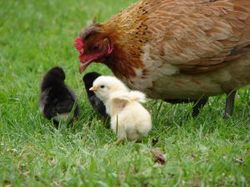
Seven states—Arizona, California, Colorado, Florida, Maine, Michigan, and Oregon—have passed laws to phase out some of the most extreme types of confinement on industrial factory farms, where animals are basically immobilized in small crates and cages for their entire lives. The largest pork and veal producers in the country have pledged to phase out crates and move toward group housing of calves and breeding pigs. The largest food retailers—like Burger King, Safeway, Denny’s, IHOP, and Wendy’s—are increasingly using cage-free eggs. Just in the last few weeks, Wal-Mart announced that its store brand of eggs are all cage-free, and Hellman’s announced that its light mayonnaise uses only cage-free eggs and its regular mayonnaise will, too.
Chicken
The Prevention of Farm Animal Cruelty would require that
any food purchased for federal programs meet animal welfare
standards.

Now, some lawmakers want the federal government to support this growing marketplace trend. U.S. Reps. Diane Watson (D-Calif.) and Elton Gallegly (R-Calif.) this week introduced the Prevention of Farm Animal Cruelty Act, H.R. 4733, to require that any food purchased for federal programs come from animals raised in a way that they had adequate space to stand up, lie down, turn around, and stretch their limbs. Watson is the chair of the House Subcommittee on Government Management, Organization, and Procurement, which oversees federal purchasing policy, and Gallegly is the co-chair of the Congressional Animal Protection Caucus; both lawmakers had backed Proposition 2 in their home state of California which bans the use of crates for veal calves and breeding pigs and cages for egg-laying hens.

The legislation is a modest approach that allows the federal government to lead by example. The policy would stimulate markets for producers using higher animal welfare standards and ensure that federal tax dollars are spent in a manner consistent with the government’s longstanding commitment to the humane treatment of animals. Just as the federal government already requires contractors to meet various standards, including wage and labor requirements, and fuel economy standards for government vehicles, it can require them to meet animal welfare standards.

It also mirrors the approach taken by Congress in the original Humane Methods of Slaughter Act, which when passed in 1958 only applied to slaughter plants that sold meat to the federal government. The policy was later expanded to include all USDA-inspected slaughter plants. The Prevention of Farm Animal Cruelty Act applies only to those producers who voluntarily choose to do business with the federal government. Federal procurement is estimated to involve approximately 1% of total meat, eggs, and dairy products sold in the U.S.

Both the U.S. House of Representatives’ and the U.S. Senate’s cafeteria already uses cage-free eggs, and the Watson-Gallegly legislation would allow other federal food purchases—such as the National School Lunch Program—to lead by example and set a higher animal welfare standard as well. Animals built to move should be allowed to move, and it’s the most basic of requirements that they shouldn’t be crammed into small crates and cages for virtually their entire lives.

If the nation’s largest food companies can do it, it’s time for the federal government to play a role and help keep the market moving in the right direction. Contact your members of Congress today and ask them to support the Prevention of Farm Animal Cruelty Act.

Thursday, February 25, 2010

A Pathway to End Animal Testing

Many animal welfare problems can be solved through innovation. It was the invention of the combustible engine and the automobile which made the horse-drawn carriage obsolete. It has been the development of warm and elegant faux fur fabrics that has given consumers and designers alternatives to animal fur in the marketplace. Immunocontraceptive vaccines can be used to manage wild populations of horses and elephants, obviating the need for round-ups and culling.

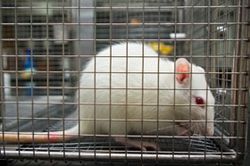
Rat
The Environmental Protection Agency needs to make the
reduction of animal testing a top priority.

It’s with this same spirit of ingenuity and creative thinking that we will see an end to animal testing for consumer and household products in our lifetime. Major corporations are putting millions of dollars into developing non-animal tests so that alternatives are available. Procter & Gamble, the American Chemistry Council, and The HSUS are sponsoring AltTox.org, a web site dedicated to advancing non-animal methods of toxicity testing.

Through HSLF’s lobbying efforts, federal lawmakers and agency officials are taking action as well. U.S. Reps. David Price, D-N.C., Ken Calvert, R-Calif., and David Obey, D-Wis., and Sen. Sherrod Brown, D-Ohio, have consistently supported efforts to promote the development of alternatives. Last year, Congress approved a $4 million increase for computational toxicology alternatives in the 2010 appropriations bill funding EPA’s budget, and included language promoting “acceptance of alternatives” as part of the bill funding the National Institute of Environmental Health Sciences. EPA is also embracing the vision for 21st century toxicology by investing in new scientific methods for risk assessment and by collaborating with other federal agencies to ultimately eliminate traditional animal tests.

We have a pathway to solve this issue, but more needs to be done. EPA has shown great leadership in advancing alternatives, but the agency still expressly requires that certain products—such as weed killers, insecticides, and germ-killing cleansers—be tested on animals in order to be sold in the United States. Dogs, rabbits, rodents, and other animals are used by the thousands in force-feeding, inhalation, and “lethal dose” tests that can cause pain, distress, and death.

EPA can move the ball forward by revising its pesticide regulations to streamline testing requirements, eliminate redundancies and duplicative tests, implement all available, scientifically valid alternative methods, and make full use of existing test results rather than require additional testing on animals. Please contact EPA Administrator Lisa Jackson today, and urge her to make the reduction of animal testing a top priority for the agency.

Monday, February 22, 2010

In Honor of the 16th Annual Spay Day

Tomorrow marks the 16th annual Spay Day, and all throughout February humane organizations, veterinarians and animal advocates are holding events to promote spaying and neutering of dogs and cats. There’s still time to enter your pet or vote for others in the Spay Day Online Pet Photo Contest this week, and search more than 600 events to join the activities in your community.

Kitten
Spay Day is a major part of the solution to end the
euthanasia of healthy and treatable dogs and cats.

Lawmakers are joining the action as well. The Washington State Senate passed a resolution last week in honor of Spay Day, and Wisconsin Gov. Jim Doyle issued a proclamation urging residents to participate in the annual event. Similar statewide recognition is pending this week in California, Maine, Maryland, Michigan, and Pennsylvania. Local municipalities, too—such as those in Rancho Cordova (California), Fairfield (Illinois), Union Springs (Alabama), San Marcos (Texas), and others—are celebrating Spay Day with official statements recognizing the tragedy of pet homelessness and endorsing spay/neuter as a humane and effective means of reducing it. 

We have made tremendous progress on this issue in recent years, even as the nation’s population of people and pets has climbed. In the 1970s, shelters in America euthanized about 12-20 million dogs and cats when there were  67 million in people’s homes. Today, around 4 million animals are euthanized while there are more than 135 million dogs and cats in people’s homes. We’ve gone from perhaps 25 percent of dogs and cats in America euthanized every year, to about three percent—thanks to the innovative spay/neuter, pet adoption, and rescue programs around the country.

The goal of ending euthanasia of healthy and treatable dogs and cats is within our reach, and Spay Day is a major part of the solution. Every dog and every cat deserves a loving home, and nothing less. Ask your state and local officials to help spread the word, and make a difference for pets in your community.

Friday, February 19, 2010

From Fighters to Friends

HSLF and HSUS have been focused on upgrading the penalties for staged animal combat, and in the last couple years we have helped pass 29 new laws to crack down on illegal animal fighting. But deterring bad behavior through law enforcement actions is just one piece of the puzzle. We also need to reach out to young men who are at risk for getting involved in animal fighting, and help to show them a better way before they head down this dead-end path. 

That’s why I’ve been so excited about the HSUS End Dogfighting program, which is now active in Chicago and Atlanta, and coming soon to Philadelphia. Former dogfighters are enlisted as anti-dogfighting advocates, and they do community-based outreach and even interrupt dogfights in progress. In neighborhoods where young men often get pit bulls for the wrong reasons, HSUS hosts weekly pit bull training classes with agility courses and other alternatives to dogfighting. The trainers work at both ends of the leash—improving the lives of people and dogs—and are reshaping the perception of pit bulls from fighters to friends.

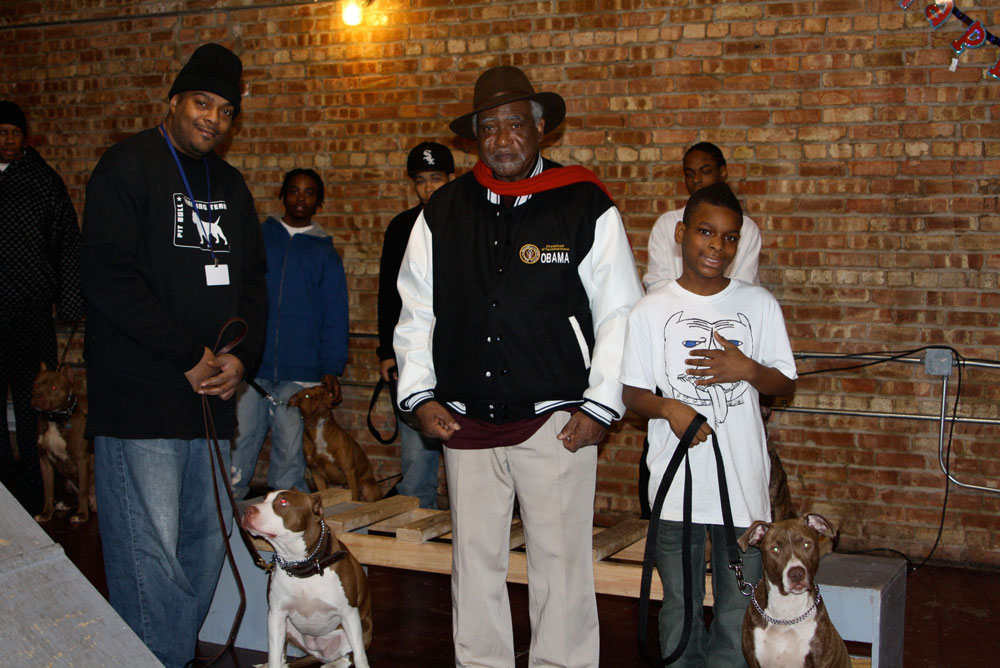
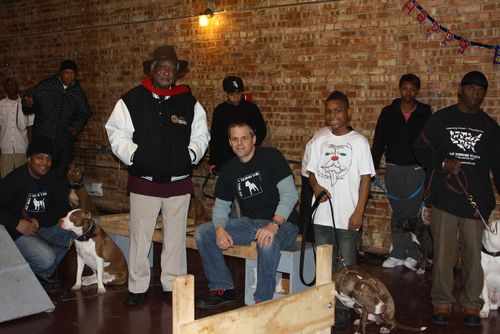
U.S. Rep. Danny K. Davis (D-Ill.)—who has been a strong supporter of our efforts in Congress to crack down on animal fighting and other large-scale cruelties—recently visited the HSUS pit bull training class held in the Austin community on the West Side of Chicago. There he visited with Tio Hardiman, HSUS director of urban outreach, and had a chance to see the team of pit bull trainers and anti-dogfighting advocates in action.

At this particular class, there were twelve young men with their pit bulls, including Terrence Murphy and his dog Elmo, who had been on the verge of a neighborhood dogfight but now have just graduated from the HSUS class and earned a Canine Good Citizen ® certificate. The congressman enjoyed observing the program and pledged to help spread the word to other lawmakers and urban communities around the country through his work with the Congressional Black Caucus.

We’re grateful to Rep. Davis for his support and for taking the time to visit the pit bull training class in his congressional district. Tio sent me the photos below from the congressman’s visit, and I’m pleased to share them with blog readers.

End_Dogfighting_Program_Danny_Davis


End_Dogfighting_Program_Danny_Davis2


Thursday, February 18, 2010

Off to a Strong Start in 2010

It was a record breaking year in 2009 for animal protection lawmaking at the state level, with 121 new laws enacted for animals. And we’re already off to a strong start in 2010, with important policy reforms charging forward in key states.

Puppy
We're off to a strong start in 2010 with a number of states
working to combat puppy mills.

Ten states last year passed laws to crack down on abusive puppy mills, but this year we’re seeing progress in the heart of the industry. In Missouri, the nation’s top puppy mill state with an estimated 3,000 mills, citizens are now collecting signatures to place the Puppy Mill Cruelty Prevention Act on the November statewide ballot. In the second and third largest puppy mill states, Oklahoma and Iowa, lawmakers are considering bills to address the most serious problems in large-scale breeding facilities.

The Oklahoma Senate Appropriations Committee yesterday approved S.B. 1712, introduced by Sen. Patrick Anderson (R-Enid), which would establish minimum animal care standards and require licensing of commercial breeders, and the bill now moves to the full Senate. Tulsa World investigative reporters Omer Gillham and Curtis Killman had exposed the rampant problems and lack of oversight on Oklahoma’s puppy mills, with their Genesis Award-winning series “Puppy Profits: Oklahoma’s Dog Breeding Industry,” and the newspaper’s editorial writers have called on state legislators to take action.

The Iowa House of Representatives yesterday passed H.F. 2280, introduced by Rep. Jim Lykam (D-Davenport), by a vote of 77-22, to give the Iowa Department of Agriculture the authority to inspect puppy mills. Iowa currently does not allow state officials to inspect USDA-licensed puppy mills, even if complaints have been reported. When dogs are languishing for years in wire cages to produce puppies for pet stores and retail sale, it’s just common sense that there should be basic standards of care and oversight.

Indiana legislators are taking action to protect pets and consumers, and also crack down on staged animal fights. The Indiana House of Representatives has passed H.B. 1258, introduced by Rep. Linda Lawson (D-Hammond), by a vote of 71-26, and the bill is now pending in the Senate. The measure would require retail pet stores to provide dog and cat purchasers with information on the animal’s history and health records, and would make it a felony to attend a dogfight or cockfight. A bill sponsored by Rep. Lawson in 2009 successfully upgraded the penalties for animal abuse and established standards of care at puppy mills, and the new legislation would build on that record of achievement by providing more public disclosure regarding puppy mill dogs, and cracking down on animal fighting spectators who finance the cruel operations with their admission fees and gambling wagers. The South Bend Tribune published an editorial today calling on the Senate to pass the bill.

There are dozens of other animal protection bills moving across the country, and we will keep you informed of their progress. As illustrated by the recent Humane State Ranking, the trends are positive but there are major gaps in the law throughout the nation. It’s only because citizens who care about animals take part in the public process that we are able to close these gaps and enact stronger policies. Please contact your state lawmakers in favor of these proposals, attend a Humane Lobby Day in your state, and be part of the growing movement to have strong laws on the books protecting animals from cruelty and abuse.

Thursday, February 11, 2010

Missouri Heads Down the Wrong Path

The Missouri House Agriculture Policy Committee this morning held a hearing on two bills, HJR 86 and HB 1825, both of which would create an individual right for Missouri citizens to be free from any state law or regulation that imposes an “undue economic burden” on any type of animal husbandry. The legislation appears to be an overreaching response to the Puppy Mill Cruelty Prevention Act now circulating for the November statewide ballot. 

Puppies
The HSUS
The Puppy Mill Cruelty Prevention Act would give dogs
basic humane standards of care.

Critics of this ballot initiative, particularly agriculture groups, have wildly exaggerated its contents. The Puppy Mill Cruelty Prevention Act would give dogs basic humane standards of care, such as food, water, veterinary care, exercise and shelter. It has no impact on show dogs, hunting dogs, or small breeders who have 10 or fewer breeding females. The fact is, there are cruel and inhumane puppy mill operations in Missouri. Dogs are confined in small cages for years on end with no exercise or human attention, and they are typically forced to live in small wire cages, exposed to extremes of heat and cold. All dogs deserve humane treatment. It’s absurd to think that these policies would have any impact on livestock issues or any other type of animal use.

But the opponents cannot defend puppy mills on their merits, so instead they trot out tarradiddles about ending all livestock farming or hunting. In fact, they made the same arguments in 1998 during the debate over the ballot initiative to ban cockfighting in Missouri, and 12 years later, there has been no attempt to impact livestock agriculture or sport hunting in the state through the legislature or through the initiative process. Their claims dating back 12 years proved false, and the invoking of these same scare tactics are equally false today. 

HJR 86 and HB 1825 are needlessly broad, and simply go too far in protecting unacceptable forms of animal mistreatment. If enacted, they could not only give immunity to inhumane puppy mills, but also provide legal protections to gamefowl and pit bull breeding operations established to sell fighting animals in commerce and exotic animal dealers churning out tigers or primates for the pet trade.

States have policies against inhumane treatment of animals for good reason: We value animal welfare. We do not look only at economic considerations in considering animal production practices, but we factor in the basic values of the people, and balance the interests. In the same way, worker safety regulations, zoning measures, community planning restrictions, and environmental laws reflect a balancing act between economics and human health and welfare. Values matter, and we are not a society that discards all other considerations in pursuit of the quickest profit.

Because the measures contain no definition of what economic burdens are “undue,” the measures will take power away from the citizens and the legislature, and instead vest the courts with unfettered discretion to sit as a super-legislature, and declare any law or regulation an “undue” burden on economic activity. Without any legal standard to apply, court decisions striking down state and local health and safety regulations will be virtually unreviewable.

Moreover, by creating an individual constitutional right enforceable in court, enactment of HJR 86 would be certain to trigger a massive, expensive, and crippling onslaught of lawsuits against state and local governments, and would likely paralyze or dismantle the entire state public health and safety framework as it applies to factory farming and other forms of animal use now subject to some limited regulation.

Citizens who work in agriculture and other animal-based industries could expect to have worker safety measures, wage hour laws, and other employee protections challenged in court by animal industry owners, and likely thrown out as an “undue economic burden.” Citizens living next to factory farms, or with factory farms looking to move into their communities, would have to watch helplessly as local zoning, public safety, and environmental restrictions are stripped away by courts applying this vague and ill-advised constitutional measure.

In short, virtually all decision-making about balancing animal-based economic activity in Missouri against the adverse public health, safety, environmental, and moral costs will be taken away and vested with the courts. Enactment of these measures could have broad and devastating consequences on the legislature’s ability to regulate any type of business involving animals.

If you live in Missouri, tell your state legislators that HJR 86 and HB 1825 are bad for Missouri, and should be rejected. And visit missourifordogs.com to find out how you can get involved and support the Puppy Mill Cruelty Prevention Act.

Monday, February 08, 2010

Taking a Bite Out of Fur

A legislative committee in Israel this weekend advanced a bill that would ban the import and export of all furs, except for those used for religious purposes. The panel previously approved a ban on the sale of dog and cat fur, and Agriculture Minister Shalom Simhon is hoping to expand the law to include fur from any animal. The religious exemption would largely be used by the ultra-Orthodox community to manufacture shtreimels, a traditional fur hat.

Fur
Urge Congress to pass The Truth in Fur Labeling Act to
address fraudulent fur selling.

“Wild animals suffer as a result of the fur industry, which is a cruel industry made for the production of luxurious artifacts,” Simhon said. “The animals’ skin is stripped from them while they are still alive. There is no reason why Israel should continue to strengthen this industry. We should set an example to the rest of the world on this matter.” He added that the law would be easier to enforce if it bans all fur products, as airport inspectors “will not have to inquire to which animal each fur belongs.”

Israel has been a leader in the humane treatment of animals, and it’s no surprise given the country’s laws are rooted in the Jewish tradition. Like all of the major religious denominations, Orthodox Judaism speaks to the concern for animal protection. Rabbi Solomon Granzfried, for example, wrote in the Code of Jewish Law, “It is forbidden, according to the law of the Torah, to inflict pain upon any living creature. On the contrary, it is our duty to relieve the pain of any creature, even if it is ownerless or belongs to a non-Jew.”

The international community has been making tremendous headway on the fur issue in recent years. The 27 member nations of the European Union banned the trade in dog and cat fur in 2007, and banned the trade in seal products in 2009. This pair of policy reforms has helped to dry up the markets for some of the cruelest fur products in the world—dog and cat fur from China and seal skins from Canada’s annual slaughter of baby harp seals—even in many northern-latitude, fur-wearing countries.

Here in the United States, which also bans the sale of seal fur and dog and cat fur, the public policy efforts have been focused on accurate and consistent labeling to make sure consumers can make informed purchasing decisions in the marketplace. A federal law from the 1950s requires most fur apparel to be labeled, but there’s a gaping loophole that excludes garments containing $150 or less worth of fur material. Many fur-trimmed jackets are sold without labels, and dog fur is slipping into the country undetected. These unlabeled jackets are allowing some retailers to falsely advertise animal fur as “faux.”

Five states—Delaware, Massachusetts, New Jersey, New York, and Wisconsin—have stronger fur labeling laws, and a bill was introduced in the California legislature to give consumers additional protections. But we need a national standard to address this fraudulent fur selling. The Truth in Fur Labeling Act, introduced by U.S. Senators Robert Menendez (D-N.J.) and Susan Collins (R-Maine) and U.S. Representatives Jim Moran (D-Va.) and Mary Bono Mack (R-Calif.), would require all fur garments to be labeled regardless of value. The legislation has 33 cosponsors in the Senate and 162 in the House, and it’s time for Congress to pass this common-sense consumer protection measure.

If Israel is on its way to banning the trade in nearly all fur items, the least the United States can do is make sure it’s labeled properly, giving consumers the opportunity to make the right choices and avoid fur products. Please contact your members of Congress today and ask them to pass the Truth in Fur Labeling Act.

Wednesday, February 03, 2010

Making Mountains Out of Mole Traps

The events that take place inside a state capitol building can have a major impact on animal welfare policy. But sometimes the events taking place outside the legislative chamber on capitol grounds can have an even more immediate and direct impact on animals themselves.

Coyote credit Christopher Bruno/SXC 
In 2000, Washington voters overwhelmingly approved
Initiative 713 to protect pets and wildlife from cruel and
indiscriminate trapping.

The Olympian reported on Groundhog Day that the Washington Department of Fish and Wildlife was investigating the illegal use of body-gripping traps to kill moles on the capitol lawns, including at the governor’s mansion. Washington voters overwhelmingly approved Initiative 713 in 2000, by a vote of 55% to 45%, restricting the use of steel-jawed leghold traps, other body-gripping traps, and certain poisons that inhumanely and indiscriminately kill and maim wildlife and family pets. The mole trapping stopped when agency officials alerted groundskeepers to the state law, and no further enforcement action is expected.

Lawmakers in the pocket of agribusiness, however, have been exploiting the incident in an attempt to repeal the citizen-approved trapping law, as they’ve been unsuccessfully trying to do for the past decade. Republican state Rep. Joel Kretz of Wauconda—the former president of the Okanogan County Farm Bureau—told the press that he wants another opportunity to gut the measure, and expand the use of traps to kill coyotes and other creatures.

The intent of I-713 was to stop the use of cruel traps for recreation and commerce in fur, and bar the use of two toxic poisons (sodium fluoroacetate, also known as Compound 1080, and sodium cyanide, commonly used in M-44 ejectors which explode in an animal’s mouth or face) to kill predators. The moderate measure included exemptions that still allow the use of certain traps when they’re needed to protect livestock, private property, endangered species, or public health and safety.

The Humane Society of the United States and other backers of the law have said repeatedly that it shouldn’t apply to common gopher and mole traps—after all, no one is wearing mole fur coats. Animal welfare groups have tried to work with other stakeholders and pass clarifying legislation that would address the needs of the timber industry, small airports, parks and local government, and private land and homeowners.

But pro-trapping ideologues have repeatedly blocked these reasonable attempts at compromise. They don’t want problem-solving legislation, but instead want to resume the large-scale killing of animals for their fur. They introduce bills like H.B. 1115 and S.B. 5389, which represent a de facto repeal of the initiative. That legislation would allow the sale of fur pelts in Washington, opening up the private market for commerce and giving trappers a financial incentive for lethal control, and also allow the use of traps not just when a specific animal problem exists, but when any problem with any animal could potentially exist. When a similar repeal effort cleared the legislature in 2003, then-Gov. Gary Locke rightly vetoed it and upheld the will of the voters.

Legislators can address concerns with the law and make acceptable changes, but must maintain the integrity of I-713 and reject any efforts to open up recreational or commercial trapping of animals for their fur. It would be a slap in the face to Washington voters who approved the law a decade ago to gut any of the core provisions that protect pets and wildlife from cruel and indiscriminate trapping.

Wednesday, January 27, 2010

Talk Back: Greyhounds, Puppies and Acts of Kindness

Today I’d like to post a selection of comments that have come into the blog. I recently wrote about the declining dog racing industry and the work of GREY2K USA, a greyhound protection organization which has helped to shape the debate on dog racing in the past decade:

Hi Michael, I just read your article “Heroes for Greyhounds” in Animals & Politics. I enjoyed it, Michael, it was concise and to the point. I live in a state that has 13 live racing tracks. You mentioned the number of injuries suffered by the racing greyhounds in Massachusetts at just two tracks. It is distressing to imagine how many racing dogs are being injured and killed at the 13 tracks in Florida. GREY2K USA has advocated record-keeping in Florida and will be legislatively seeking its approval. When we get record-keeping in place, it will heighten public awareness and help speed up the demise of this anachronistic industry.—Kathy P.

Thank you so much for this article—this is a subject especially near and dear to my heart. I have been involved with greyhound rescue and adoption since 1997 with an Illinois and Southeastern Wisconsin group, Greyhounds Only Adoption and Rescue. Before adopting my first greyhound in 1997, I did not know of the atrocities associated with this industry and since learning, I have worked to make people aware and promote adoption of these wonderful animals. Thank you for helping with this cause (as with all the animal issues).—Mary R.

We are badly in need of legislation in Arizona for the welfare of our animals. Arizona has very few laws on the books for the protection of the greyhound. Everyone I talk to here in Tucson acts like they are afraid to get legislation on the books. We need to get the dog tracks shut down SOON.—Shirley B.

With our recent kick-off meetings in Missouri to place the Puppy Mill Cruelty Prevention Act on the November 2010 statewide ballot, advocates have expressed their enthusiasm and support for cracking down on abusive puppy mills:

How can anyone look at these beautiful puppies and treat them inhumanely? I am praying for the pain to stop.—Cecile J.

I attended the kick-off meeting today in St. Louis. I really enjoyed your speech. You are a very inspirational speaker. I am eager to get started on this initiative! Thanks!—Lisa R.

We need to get the legislature to pass a law about puppy mills and the bad treatment they are receiving. They need health care, a place to play and run, good food and water to drink, a warm place to sleep at night when it's cold, and a cool place to sleep during the summer. I don't like hearing about the abuse of animals, the owners need to be prosecuted to the fullest extent.—Terri M.

We’ve also received feedback in response to my post highlighting recent acts of kindness for animals in Haiti and here at home:

Hi Mike: This is good to hear, but what about saving cats?—Carolyn

Thanks for your question, Carolyn. We’re working to help all animals in Haiti. I have five cats of my own—Georgia, Lexi, Mario, Misty, and Oliver—and it’s a cause close to my heart. One recent effort I’m very proud of is The Humane Society of the United States’ work to save the feral cats on San Nicolas Island. Click here to read about these rescued cats and their brand-new shelter at The Fund for Animals Wildlife Center.

The Haiti earthquake is devastating, but honestly, after hearing the news and thinking of the people, the NEXT thing I thought of was the animals. If I didn't have to make money to pay bills, or if I was rich, I'd get on a plane with one of the rescue groups and go to help the animals, and to build a humane infrastructure. The animals are always the worst to suffer and the last to receive help or consideration.—Dyan K.

Thank you all for submitting these comments, and please keep the feedback coming. If you have a question or comment and would like to join the conversation, please send me an email. Thanks for all you do for animals.

Monday, January 25, 2010

Acts of Kindness

All eyes have been on Haiti in the aftermath of the deadly earthquake that has killed at least 150,000 people in the western hemisphere’s poorest nation. As we saw during Hurricane Katrina and other natural disasters, the tragedy for people is coupled with a tragedy for animals—our fortunes are intertwined as animals are part of our daily lives in so many ways. A team of veterinarians and disaster responders from The Humane Society of the United States, Humane Society International, and Humane Society Veterinary Medical Association has been on the ground in Haiti since Thursday, assisting stray dogs, farm animals, and wildlife. 

Hsi_haiti_dog
A team of veterinarians and disaster responders are on the
ground in Haiti to help animals.

As Wayne Pacelle reports on his blog today, the team also rescued two dogs, Bella and Dieter, who were left behind when an American family was forced to evacuate Port-au-Prince. Bella and Dieter were Katrina survivors, and now miraculously have survived two of the deadliest disasters of the 21st century’s first decade. Their story is one happy ending amidst the larger crisis: Haiti had no animal shelters, animal protection groups, or veterinary schools, and the effort to rebuild the country’s animal welfare infrastructure—like the effort to rebuild the Gulf Coast after Katrina—will go on for some time.

While we watch the drama unfold in Haiti, we also take note of heroic acts by government officials and first responders here at home. As many parts of the South experienced blizzards and record low temperatures this month, lawmakers reminded citizens accustomed to a more temperate climate that the freezing outdoors is no place for their pets. In Brownsville, Texas, Mayor Pat M. Ahumada Jr. issued a notice alerting pet owners that leaving a dog outside in extreme weather conditions is a violation of the state’s anti-cruelty statute, and he opened an emergency animal shelter where dogs could be housed until the cold weather recedes. After seeing reports of dogs found dead and malnourished and suffering from exposure to cold in other Texas cities, Mayor Ahumada took action to make sure that Brownsville residents would have peace of mind and their dogs would have shelter from the storm.

And as California experienced record rainstorms and flooding last week, the Los Angeles Fire Department responded to a call that a German shepherd was stranded in the swelling Los Angeles River. Firefighter Joe St. Georges splashed down from a helicopter and wrestled the dog to safety, but in the process he was bitten on the thumb by the frightened canine. The hero didn’t have any hard feelings and knew the dog was not to blame; he told the press: “He’s cold, he’s wet, he’s scared, and then here’s this stranger jumping on his back for all intents and purposes, and he did what dogs do.” The rescued dog has been named Vernon, after the city where he was found.

Thanks to the selfless people who come to the aid of animals in their time of crisis, dogs like Vernon, Bella, and Dieter will have a second chance. And thanks to the foresighted planning and emergency preparedness by local officials such as Mayor Ahumada, we can make sure animals are safe during a crisis and never end up in harm’s way. Every act of kindness, grand and small, matters to these creatures.

About Mike

  • Michael Markarian is the president of the Humane Society Legislative Fund, a 501(c)(4) social welfare organization that lobbies for animal welfare legislation and works to elect humane-minded candidates to public office. In almost 15 years in the animal protection movement, Markarian has worked for the passage of countless state laws and federal statutes to protect animals, in addition to helping defeat some of the strongest anti-animal welfare politicians in the United States. ...More

Get Political for Animals

Search


  • WWW
    Animals & Politics
Powered by TypePad